
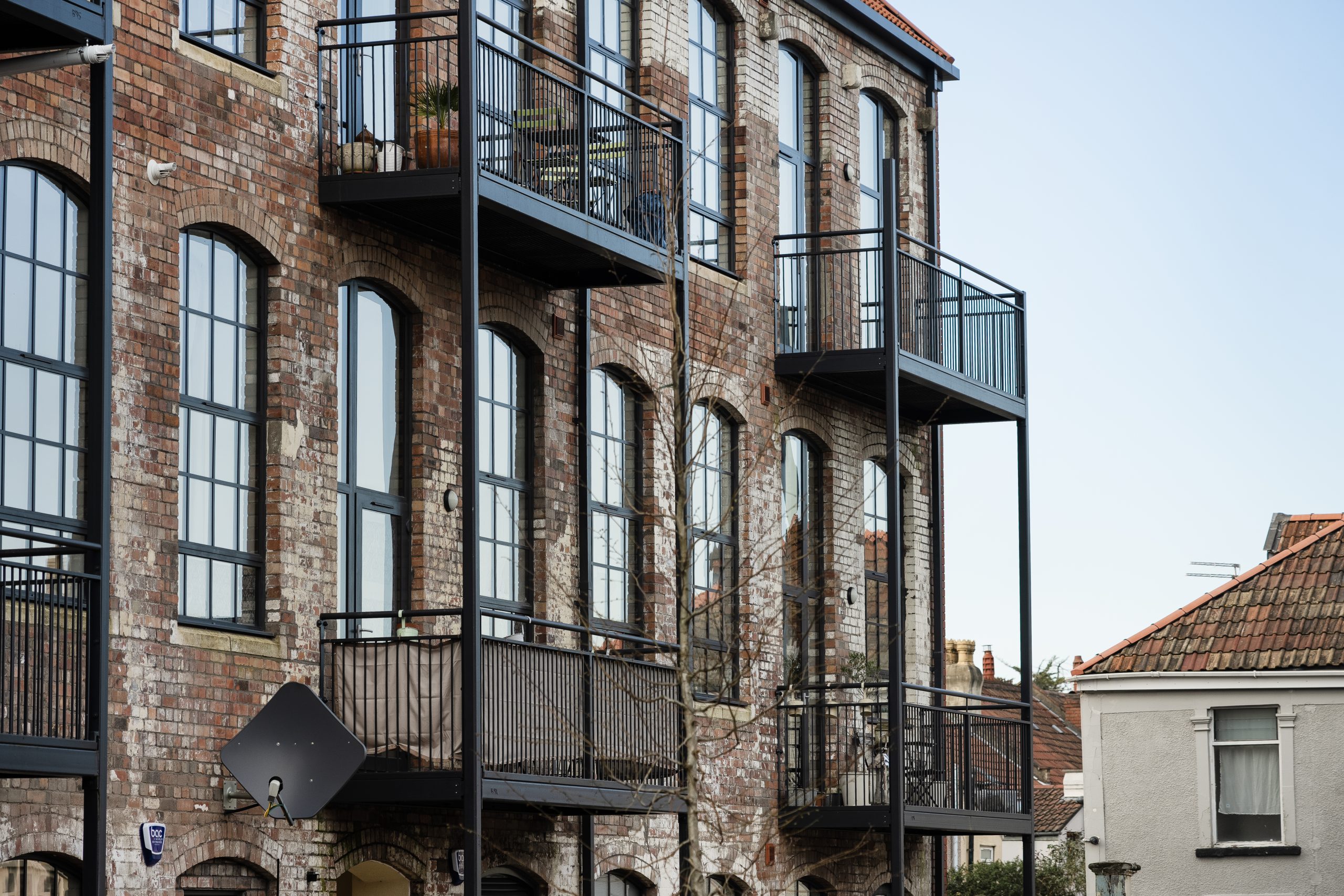
A factory conversion in Greenbank, Bristol. Mortgageable, in a city with a 25,000-home shortfall through 2040, 12.9% rental growth year-on-year, and an economy expanding twice as fast as the UK average. Gross yields ~5.5–6.0% on day one.
Most investors buying Bristol are buying the trend. Prices have moved, rents have moved, and the natural conclusion is that they'll keep moving. Buying momentum is a perfectly reasonable trade. It's just not the trade we're making.
The trade we're making is the gap. Marrons' analysis says Bristol needs 60,000 new homes by 2040. Bristol City Council's draft Local Plan provides for 35,000. The council is on record about it. New supply doesn't appear from nowhere — it requires planning, land, and time. None of those scale on demand.
Rent grew 12.9% year-on-year not because the city is fashionable, but because the bottleneck is structural. That's a defensible position, not a fragile one.
Bristol's case rests on four things working together: recorded rental growth, a planning shortfall the council has admitted in writing, an economy growing faster than the UK average, and a converted asset that holds its character.
01.
That's not a forecast. That's the Living Rent Commission's recorded figure for Bristol. When supply lags this far behind demand, rent growth compounds. A 5.5% yield today is a 6%+ yield in three years if the trend holds even at half the current pace.
02.
Marrons' analysis: 60,000 homes needed by 2040. Bristol City Council's draft Local Plan: 35,000. The council itself is on record about the gap. New supply requires planning, land, and time — the asset class you're buying is constrained by paperwork, which is a feature, not a flaw.
03.
8.9% projected growth over five years, against 4.5% nationally. Aerospace (Airbus, GKN, Rolls-Royce, Boeing), digital (Graphcore, OVO Energy), and two universities with 70,000 students between them. Tenants with disposable income, not a transient student market.
04.
A historic factory conversion in Greenbank, on the Bristol & Bath Railway Path. 63 apartments and four 3-bed houses, plus commercial workspace, café, and community hub on the ground floor. The neighbourhood already exists. You're inheriting demand that's been there for a hundred years.
An available 1-bed at £287,930 (investor price), on a 75% LTV mortgage at an illustrative 4.5% rate. Bristol rents are conservatively assumed; recent comparables run higher.
The case is real. The trade-offs are real too. They belong on the same page.
01.
The Bristol thesis depends on rental growth and capital position doing the heavy lifting over time, not on the headline percentage at completion. That's a deliberate trade for structural defensibility — and worth being clear-eyed about, since the input number reads modestly compared to a yield-led deal.
02.
Some blocks complete sooner, others land later in 2026. That's a feature of a development this size rather than a flaw. The developer is well capitalised and the planning is in place.
the quick one
Virtual or in person at our Bromley office. No obligation, no follow-up.
Schedule →still sceptical?
The case for working with us. Strong opinions, loosely held.
Read more →show me the maths
Real deals. Real numbers. No cherry-picked projections.
View cases →old-fashioned
Prefer a form? info@magnapartners.co.uk, 020 3880 6240.
Contact →Property values can fall as well as rise. Past performance and projected returns are not reliable indicators of future results. Rental yields and occupancy levels are projections based on current market conditions and are not guaranteed. Bristol rental growth and capital projections reflect current market data from Bristol City Council, Living Rent Commission, ONS, and Avison Young. Off-plan completion dates are anticipated by the developer and are subject to change. Mortgage availability, rates and stamp duty are subject to change and depend on individual circumstances. All figures are illustrative and gross of income tax. Magna Partners Ltd is a property introducer and not a regulated financial adviser. You should take independent legal, tax and financial advice before committing to any investment.